

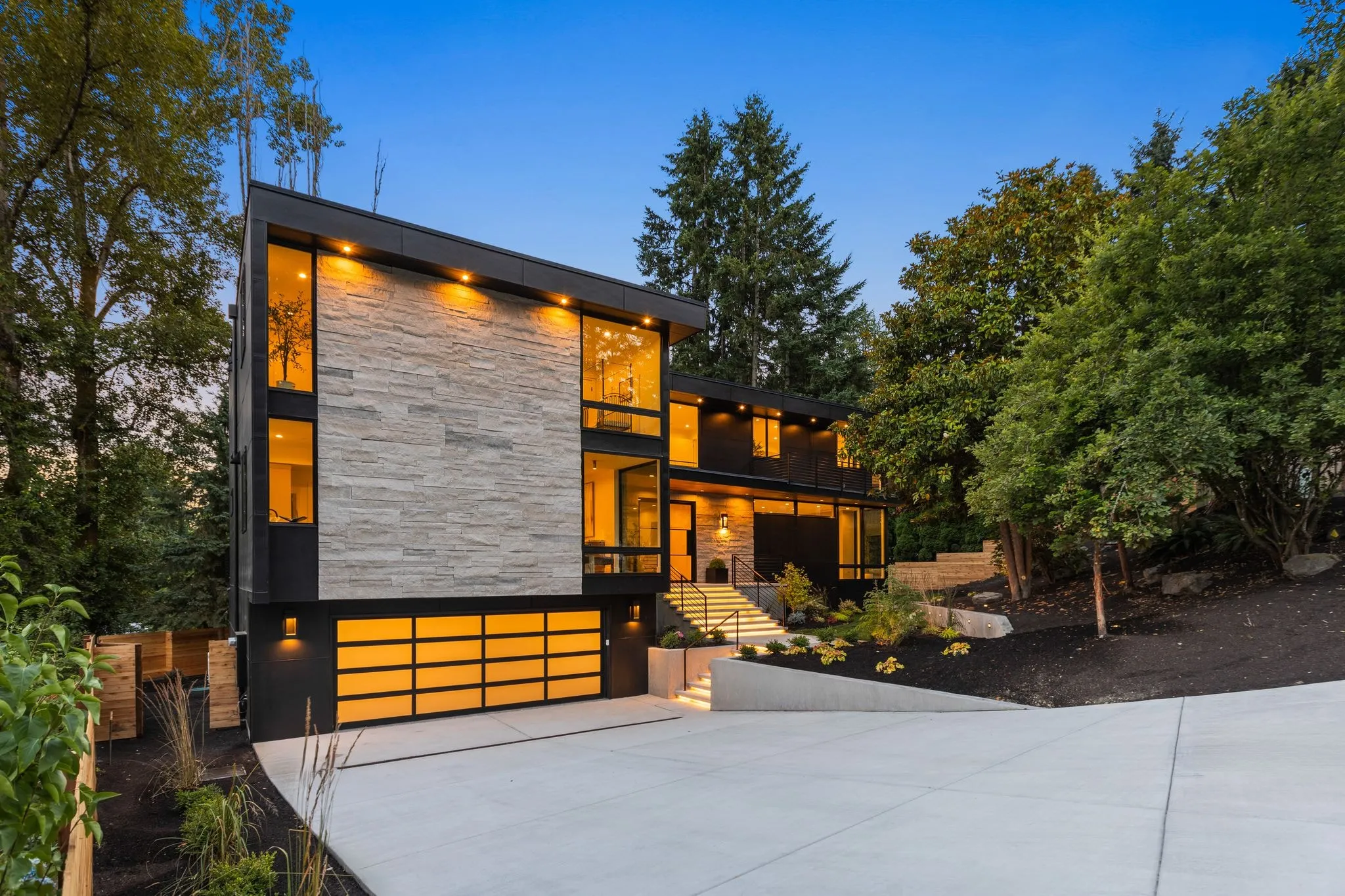
Twilight and Dusk Photography in Bellevue, Timed to the Real Blue-Hour Window
Photos delivered by noon the next day, or the shoot is free.
- Over $2 billion in real estate photographed
- Photos delivered by noon the next day
- 4.9★ average rating on Google
Reading Bellevue’s Twilight Window Before You Book
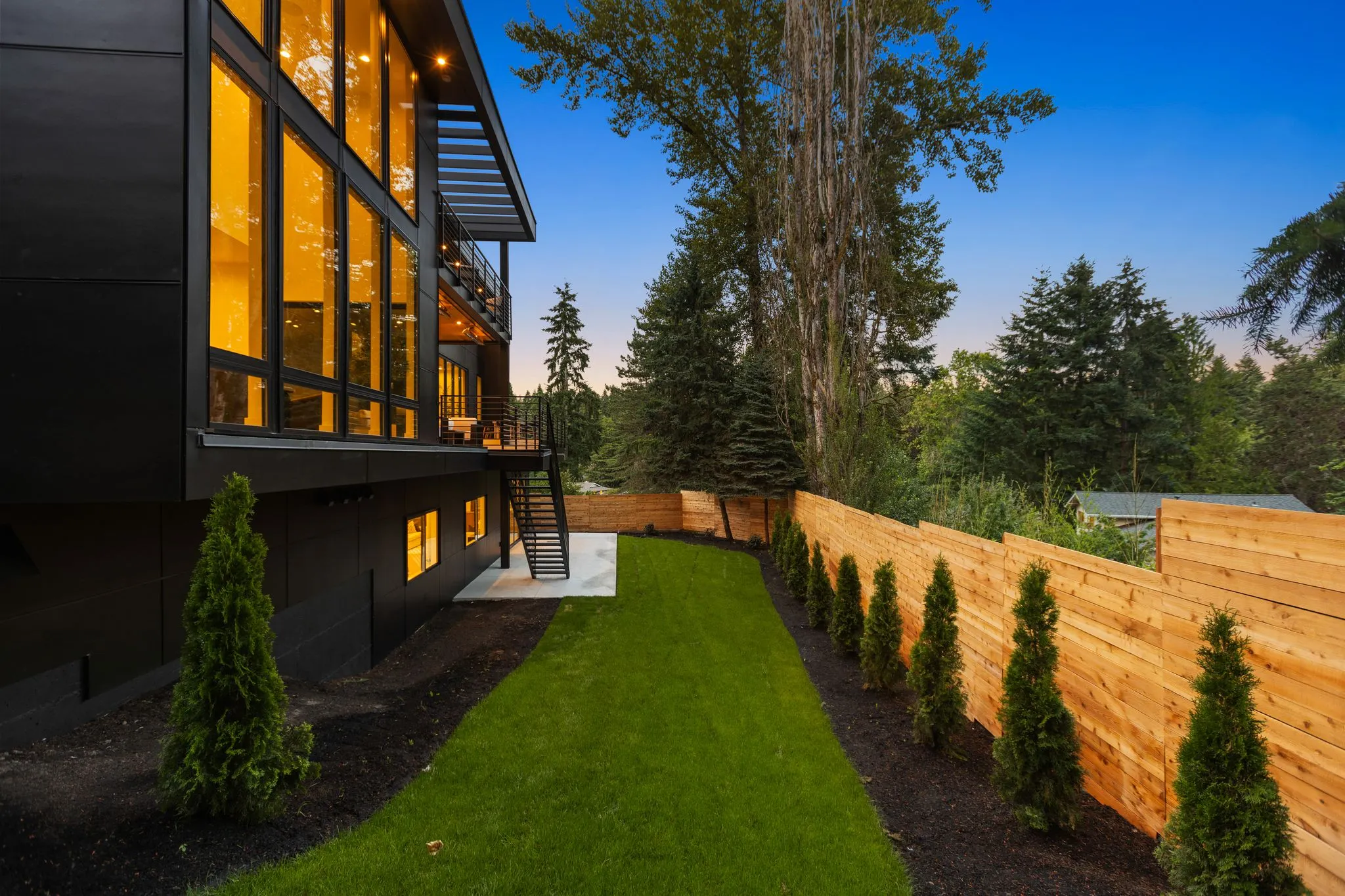
Twilight in Bellevue is not one fixed time on a clock. It moves with the seasons, hard. Sunset lands near 9 p.m. in July and closer to 4:30 p.m. by December. We plan every dusk shoot around that shift, not around a generic schedule someone printed once and never updated.
The sky only holds that deep blue colour for a short stretch.
For listings along Lake Washington in West Bellevue, the water adds another layer. It catches the last light and doubles the colour across the frame, but only for a few minutes. Show up ten minutes late and the lake has gone flat and grey, and that shot does not come back until tomorrow.
- Cloud cover can shorten the colour or wash it out completely
- Summer gives you a slow fade, winter gives you fifteen minutes and it is done
- West facing facades hold the glow longer than east facing ones
- Mature tree cover around wooded lots, like you will see in Bridle Trails, can block low light before dusk even really starts
We treat the calendar like it is part of the camera bag. Skip that step, and the twilight set looks like an afterthought instead of the photo that gets the click on the listing. It rides along with the daytime real estate photography on the same visit.
Homes That Gain the Most From Dusk Photography
Not every Bellevue property benefits equally from twilight photography, and understanding which homes gain the most helps sellers and agents decide where to spend the marketing budget. The technique performs best when a property has some form of light source, reflection, or skyline backdrop that a standard daytime shot cannot capture. Three Bellevue property types consistently show the biggest before-and-after difference: downtown high-rise condos, lakefront view lots, and older wooded single-family homes.
Downtown high-rise condo towers built during the 2000s and 2010s boom, including buildings like Bellevue Towers and The Bravern, are prime candidates for dusk photography. These units often have floor-to-ceiling windows and balconies facing the skyline, and at twilight the interior lights combine with the glowing city grid outside to create a dramatic layered image. A daytime photo of the same unit often shows washed-out glare or a flat grey skyline, while the dusk version turns the window wall into the centrepiece of the listing rather than an afterthought.
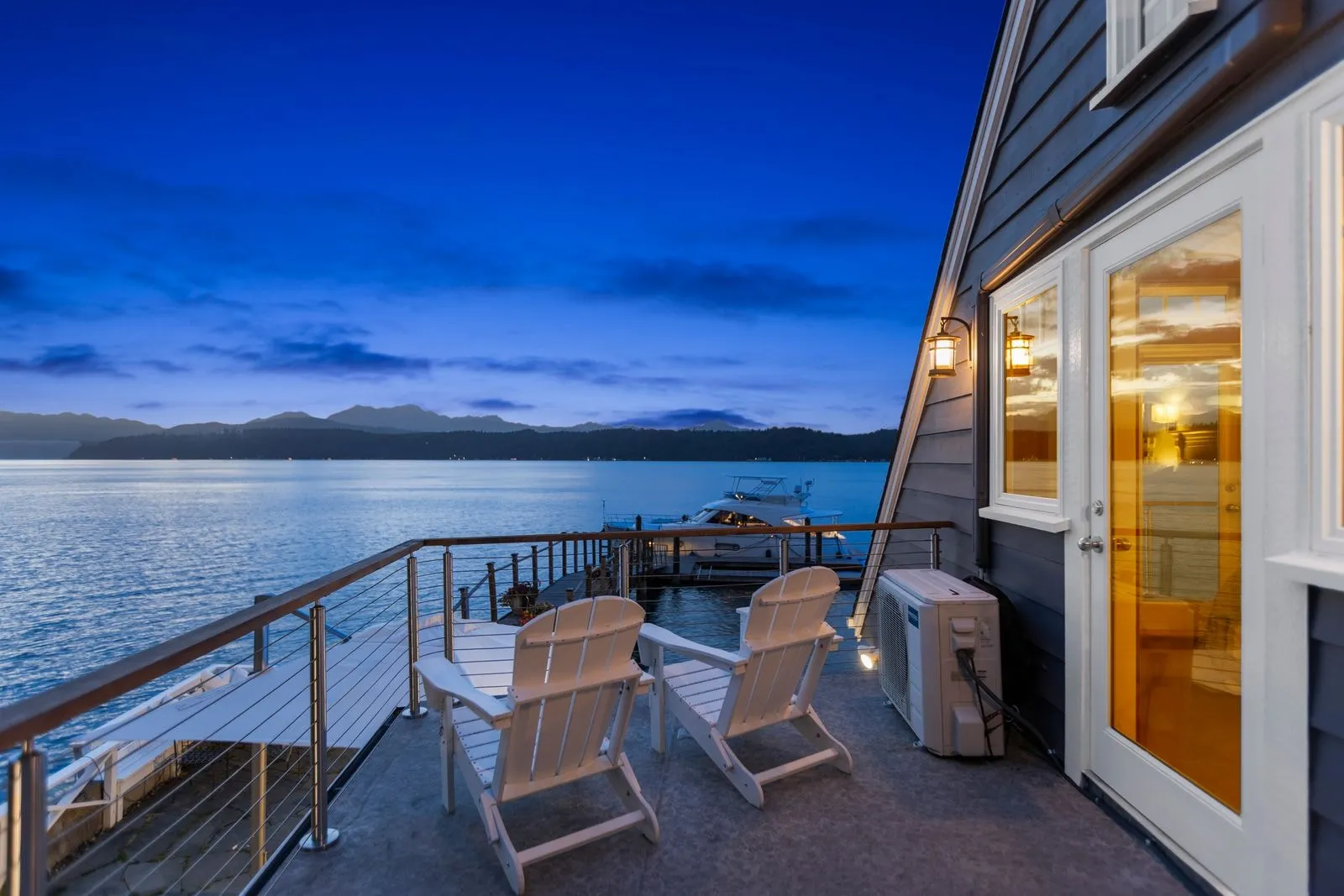
Lakefront and view-lot homes near Bellevue on Lake Washington are another strong match. These properties frequently include docks, boat lifts, patios, and landscape lighting designed specifically to be enjoyed in the evening. Photographing these features at dusk lets the water reflect the sky and any dock or path lighting, giving buyers a sense of what it feels like to be on the property at the golden hour, which is often when the sellers themselves enjoy it most. On this tier of listing it usually pairs with full luxury real estate photography.
Older wooded single-family lots in neighbourhoods like Bridle Trails present a different case. These homes typically have mature tree canopies and less architectural or landscape lighting than newer construction, so the value of dusk photography here comes primarily from sky colour rather than illuminated features. A well-timed shot with a pink or amber sky filtering through tall trees can soften a dated exterior and add warmth that daytime lighting cannot replicate, even without extensive exterior lighting fixtures.
- Downtown high-rise condos: best for skyline reflections and interior-exterior light contrast
- Lakefront and view-lot homes: best for dock, water, and landscape lighting features
- Wooded single-family lots like Bridle Trails: best for sky colour and tree silhouette softening
- Homes with minimal exterior lighting may need supplemental lighting setup to see full benefit
When to Skip Twilight Photography
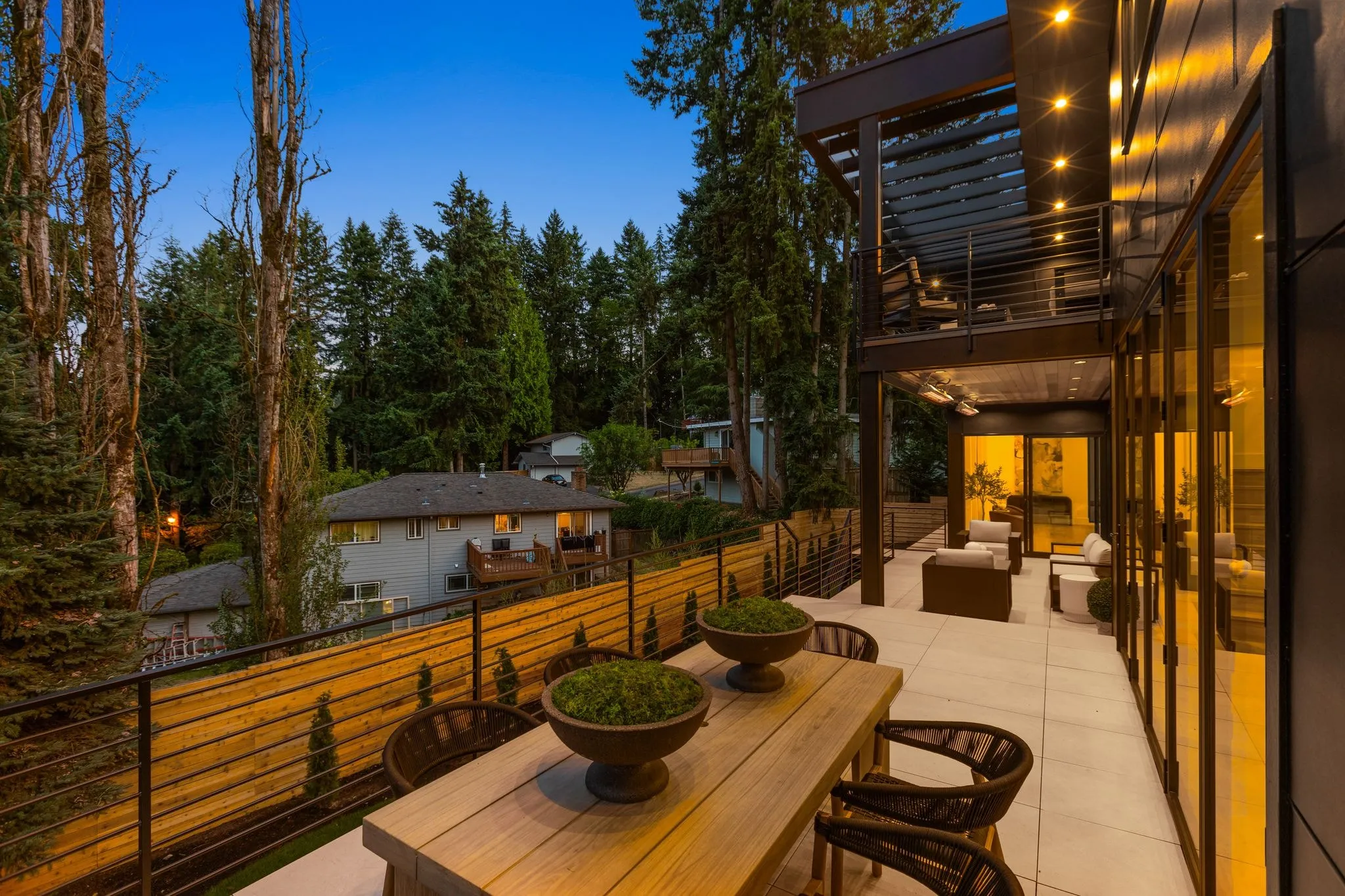
Not every listing needs a twilight set. That is just the truth.
If you are listing a condo in a high-rise near Downtown Bellevue, the exterior shot usually is not yours to sell. You do not control the building’s facade or the lobby lighting, so a dusk exterior does little for your marketing. Flambient interior photos carry that listing.
Same goes for a rental or a fast-turn flip where the goal is getting the listing live, not building a brand moment. A tight timeline and a modest price point do not need the extra hour of shooting.
- The home faces east with no real curb view at dusk, so the twilight angle will not add anything new
- It is an interior-only listing, like a condo or townhome without a private yard or facade
- You are on a rush timeline and the standard daytime set already tells the story
- The property backs up to another building or lot line with no usable exterior shot at any hour
Bellevue’s winter sunsets land early, sometimes before 4:30 in December. That short window works fine for a single-family listing with a lit facade. It does almost nothing for an interior unit with no exterior to shoot.
Ask yourself one thing before you add it: will a buyer scrolling Zillow stop on this shot? If the honest answer is no, skip it and put the budget toward getting the interior photography right instead.
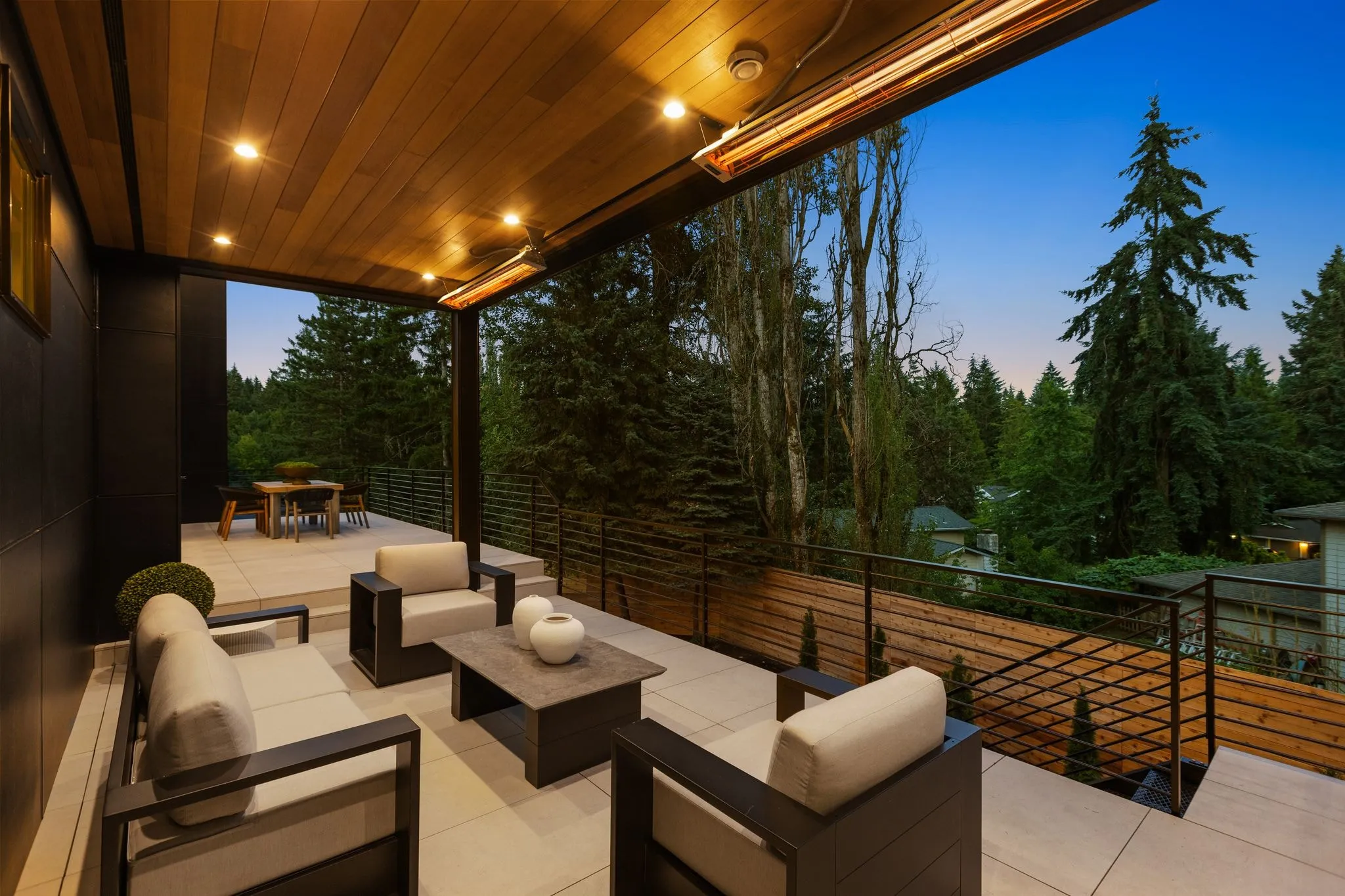
Inside a Flambient Twilight Shoot
A true twilight image is not one click of a camera. It is a flambient blend, a term that combines flash and ambient light, built from a series of separate exposures captured within minutes of each other as the sky shifts from soft blue to deep indigo. A skilled photographer working a Bellevue property on Lake Washington or in a Somerset hillside home will typically fire off a base ambient exposure for the sky, additional exposures for the home’s exterior architectural lighting and landscape fixtures, and then flash-lit or long-exposure frames for each interior room visible through the windows so the glow reads naturally rather than blown out or pitch black.
Those layers are then hand-blended in editing software, masking in the correct light source for each part of the frame. This is fundamentally different from automated HDR, which merges exposures algorithmically and often produces flat, grey skies or halos around window frames. It is also not a single exposure with a slow shutter, which cannot simultaneously hold detail in a bright sky, a lit doorway, and a dim interior. The manual blending is what gives twilight photography its signature warm, magazine-quality look.
- Ambient sky exposure captured during the narrow blue hour window
- Exterior lighting exposure for porch lights, landscape fixtures, and architectural accents
- Individual interior light exposures for each window visible from the shooting angle
- Manual masking and blending in editing software, not one-click software
- Colour correction to balance warm interior tones against the cooling evening sky
In the Bellevue and greater Eastside market, twilight coverage is almost always bundled into the same appointment as the full daytime listing shoot rather than booked as a separate visit. The photographer typically shoots interiors and daylight exteriors in the afternoon, breaks, then returns to the property for a 20 to 30 minute twilight window that same evening. This keeps furniture, staging, and lighting consistent across the entire gallery, which matters just as much on a spec home shot for new construction photography.
Pricing follows the same bundled logic. Rather than a standalone hourly add-on, twilight work is usually folded into a package rate determined by square footage and lighting complexity, since a 6,000 square foot Medina estate with extensive landscape lighting takes considerably more blending work than a compact Bellevue condo.
Waterfront estates often add a drone twilight shot to capture the property against the lake and Seattle skyline. Because this involves flying at dusk in populated airspace, it legally requires an FAA Part 107-certified remote pilot, something worth confirming before booking.
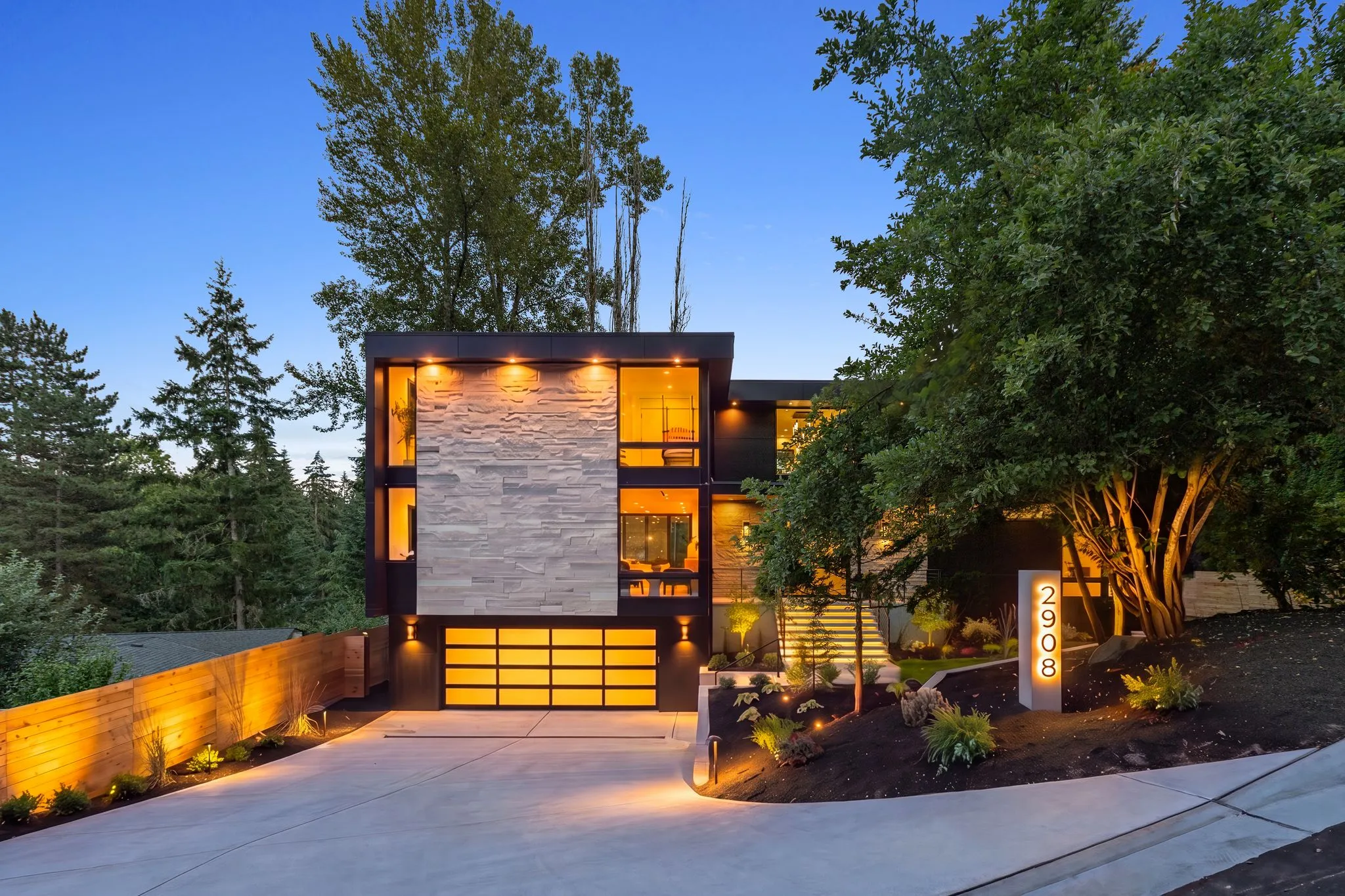
Handling Weather and Rescheduling Without Losing the Shot
Bellevue sits squarely in a marine climate zone, and that means dusk skies are unpredictable for a good chunk of the year. A flat, grey overcast at golden hour produces flat, grey photos, no matter how skilled the photographer or how advanced the camera gear. There is no lighting trick, lens filter, or editing technique that manufactures colour and depth from a colourless sky. This is simply a physical limitation, and pretending otherwise sets unrealistic expectations for the final images.
Because of this, rescheduling a twilight session is not an occasional inconvenience, it is a built-in part of how the work gets done properly around Bellevue, Kirkland, Redmond, and the greater Eastside. Shoots are planned around the National Weather Service forecast for cloud cover percentage, not just the sunset time. When the forecast shows heavy overcast or rain moving in during the golden hour window, the smart move is to move the shoot to the next clear evening rather than deliver a mediocre result on a fixed schedule. Clients are notified as soon as a pattern shift is spotted, typically 24 to 48 hours ahead, so listing timelines can be adjusted without last-minute scrambling.
- Forecasts are checked multiple times in the 48 hours before a scheduled shoot, not just once at booking
- Sessions are rebooked to the next viable clear or partly clear evening at no extra charge
- Clients receive a same-day heads-up text or call if conditions look questionable
- Backup dates are held open during unsettled weather stretches common in fall and winter
Once a shoot happens under good conditions, every image goes through a 15-point quality assurance process before it reaches a client’s inbox. This includes checking colour balance across interior and exterior exposures, verifying that window pulls and sky blends look natural rather than artificial, confirming exposure bracketing lined up correctly, and reviewing each frame for lens flare, reflections, or stray light contamination. Twilight images are technically demanding because they combine multiple exposures, interior lighting, and exterior ambient light into one believable frame, and that blending is exactly where amateur results tend to fall apart.
Turnaround is straightforward: edited images are delivered the next day. That means a shoot completed Tuesday evening lands in the client’s inbox Wednesday, ready for MLS upload or marketing use, with no surprise delays layered on top of any weather-related rescheduling that may have already happened earlier in the process.
Recent Twilight Sets
Dusk exteriors shot in the same appointment as the daytime set. Click any photo to view it full size.
Frequently asked questions
How far in advance should I book a twilight shoot in Bellevue?
What should I expect when the photographer arrives for a dusk shoot?
Why does Bellevue’s changing sunset time matter for listing photos?
Which Bellevue homes benefit most from twilight photography?
Should every listing get a twilight photo shoot?
What happens if clouds or bad weather affect the twilight shoot?
Ready to book your Bellevue shoot?
Tell us the address and the square footage. We’ll give you a price and a time slot on the same call.